LONGEVITY AND HEALTHY AGING FOR ACTIVE ADULTS OVER 50
What large studies have measured about fitness and aging. Tests linked to lifespan, biological age, and daily habits, reported as associations where that is all the research shows.
19 ARTICLES
BOOKS ON THIS TOPIC
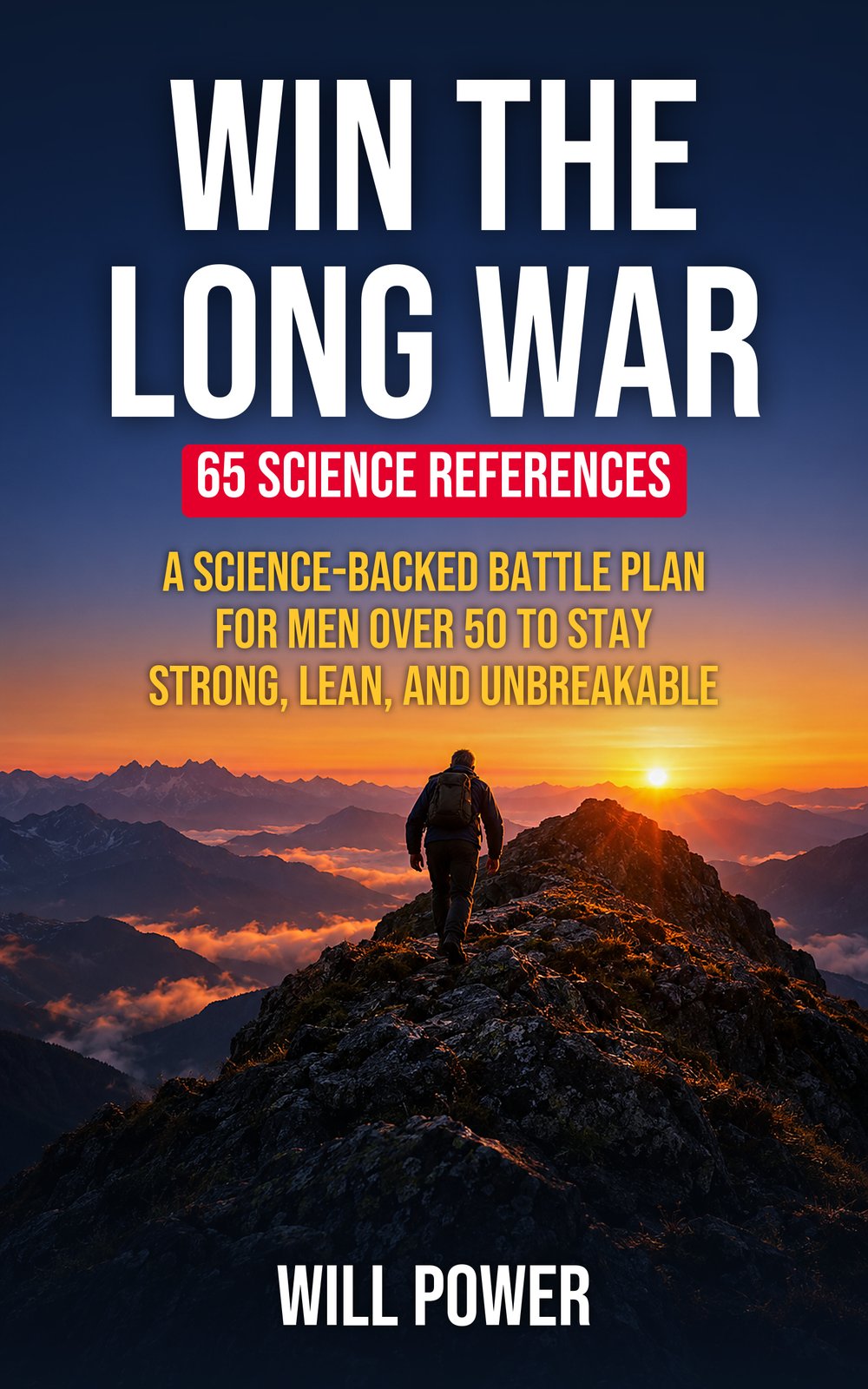
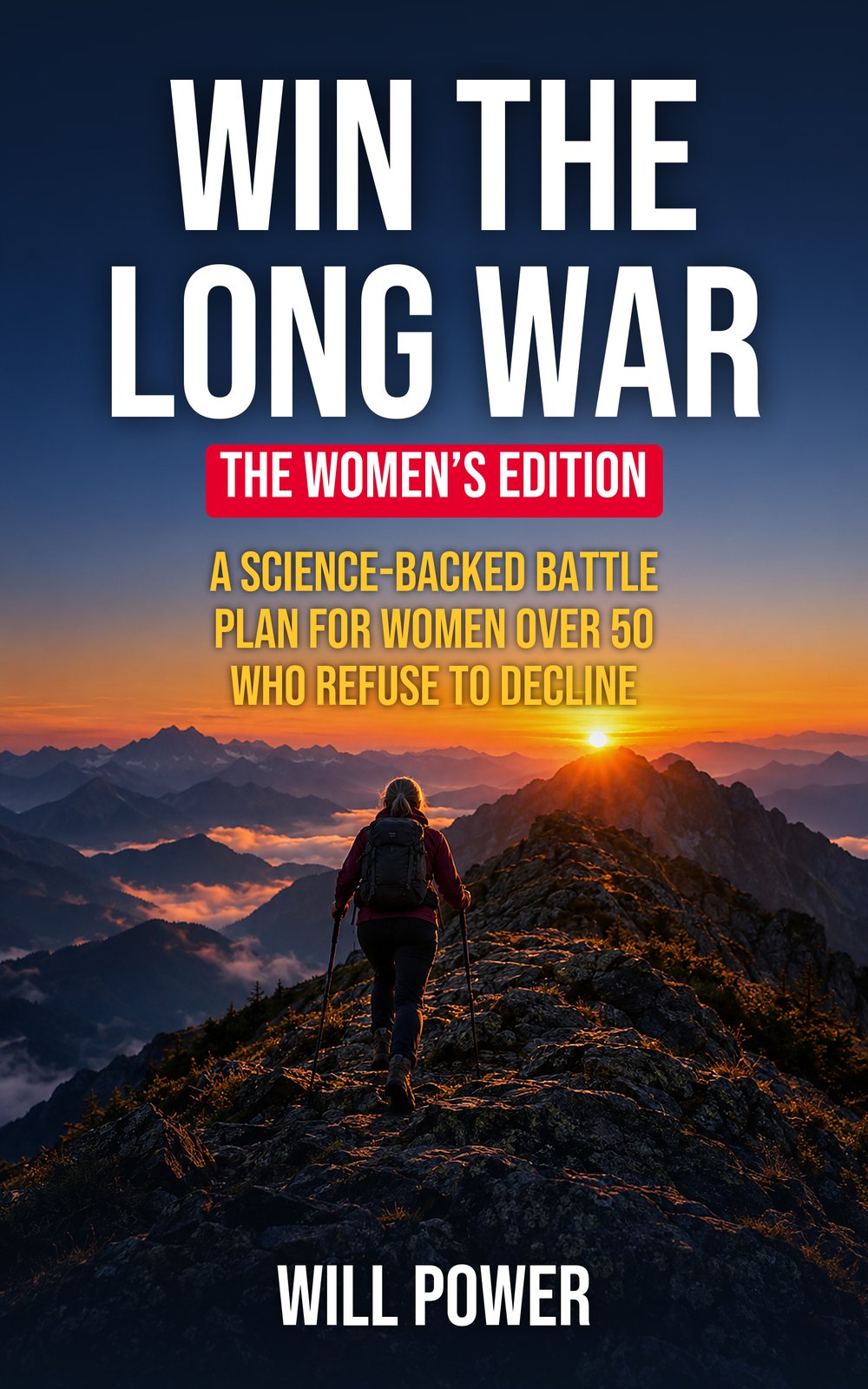
ARTICLES
SLEEP REGULARITY AFTER 50: WHAT THE COHORT DATA MEASURED
Large accelerometer cohorts report that more consistent sleep timing was associated with lower mortality and fewer cardiovascular events, in some analyses more strongly than sleep duration. Here is what was measured, where two dementia analyses disagree, and why no trial has yet tested whether changing your schedule changes outcomes.
STANDING ON ONE LEG AND RISING FROM THE FLOOR: WHAT THE MORTALITY STUDIES MEASURED
In cohorts of adults aged roughly 46 to 80, people who couldn't hold a 10-second one-leg stand, or who needed support to sit down on the floor and stand back up, died at higher rates over the following years. Here's what those observational studies measured, their limits, and what balance-training trials have and haven't shown.
WHAT CHANGES AFTER 50 — AND WHAT TRAINING STILL CONTROLS
Chapter 2 gave you five numbers. This chapter explains why they move at different speeds — power fades before strength does, recovery timelines shift without a fixed formula, and resistance training still produces real, measurable strength gains at fifty-plus.
FALLS AND EXERCISE: WHAT 108 RANDOMIZED TRIALS MEASURED
A Cochrane review of 108 randomized trials and 23,407 people found exercise reduces the rate of falls by 23% — but the effect is specific to balance and functional work, and resistance training alone was rated uncertain. What the evidence supports, where it thins out, and the population gap nobody mentions.
TAURINE AND AGING: A 2023 HEADLINE AND A 2025 REVERSAL
Science published "Taurine deficiency as a driver of aging" in 2023, then "Is taurine an aging biomarker?" in 2025 — reporting that circulating taurine held steady or rose with age in three human cohorts. Here is what each study measured, and what the supplementation trials have and have not shown.
THE PROTOCOL FOR LIFE: HOW A TRAINING SYSTEM ADAPTS BY DECADE
Chapter 12 of The Roman Protocol makes one distinction: adapting the system is not the same as abandoning the standard. Here is the decade-by-decade adaptation schedule, the mortality and sarcopenia research it is built on, and the four weeks each year that historically end protocols.
THREE ONE-MINUTE BURSTS A DAY: WHAT THE VILPA RESEARCH ACTUALLY SHOWS
A 2022 Nature Medicine study of 25,241 nonexercisers found that roughly 4.4 minutes a day of brief vigorous movement — stairs, hills, carrying things — was associated with a 26 to 40 percent lower mortality risk. Here is what that does and does not prove.
THE WEEKEND WARRIOR PATTERN: DOES TWO BIG DAYS BEAT A SPREAD-OUT WEEK?
A 2023 JAMA study of 89,573 UK Biobank participants found that reaching 150+ minutes of activity a week with most of it in one or two days was associated with similarly lower risk of heart attack, heart failure, stroke, and atrial fibrillation as spreading it across the week.
MOVE: THE DAILY NON-NEGOTIABLE
Training is scheduled and structured. Moving is the daily baseline underneath it — and the research shows a hard workout doesn't undo a day spent sitting.
DAILY STEP COUNT AND MORTALITY RISK
The 10,000-step target came from a 1960s marketing campaign, not research. Here's what recent mortality studies actually show — and why the target is lower for people over 50.
STAY IN THE FIGHT: AI FOR INJURY PREVENTION AND LONGEVITY
Grip strength predicts mortality better than blood pressure. For the over-50 athlete, injury — not disease — is the biggest threat to staying in the fight. Here's how AI helps you avoid it.
GRIP STRENGTH IS THE LONGEVITY METRIC ENDURANCE ATHLETES IGNORE
The PURE study tracked 139,691 adults across 17 countries and found grip strength predicts all-cause mortality better than blood pressure. Most endurance athletes have never tested it. Here is what the data shows — and the three exercises that move the number.
GRIP STRENGTH PREDICTED DEATH BETTER THAN BLOOD PRESSURE IN A 142,861-PERSON STUDY
Every 5kg reduction in grip strength was associated with a 16 percent increase in all-cause mortality risk in the PURE study — a stronger association than systolic blood pressure showed in the same dataset. The farmer's carry is a longevity test you can improve weekly.
EXERCISE DOESN'T CANCEL OUT SITTING — WHAT WOMEN OVER 50 NEED TO KNOW ABOUT THE HOURS IN BETWEEN
You can train hard for 60 minutes and still face real health consequences from sitting the other 10 to 12 waking hours of your day. Training and moving are two separate variables — here's the daily minimum that closes the gap.
WHY MEN WHO STOP RACING START DECLINING — AND HOW TO BUILD A LIFE THAT NEVER LETS YOU QUIT
Within two years of a race calendar going empty, the weight comes back, the fitness retreats, and a strong, disciplined person starts talking about their old races in the past tense. It's not weakness. It's biology — and there's a fix.
A 2019 JAMA STUDY OF 6,000 ADULTS FOUND PURPOSE PREDICTS WHO DIES YOUNGER — RACING IS HOW YOU BUILD IT
Strong, disciplined people fall apart within two years of their last race. It's not weakness — it's biology. Here's the research on purpose, mortality, and why the registration is what actually changes behavior.
A 122,007-PATIENT STUDY FOUND THE LEAST-FIT GROUP HAD 5X THE DEATH RISK OF THE ELITE-FIT GROUP
Cardiorespiratory fitness predicted mortality better than smoking, hypertension, and diabetes in a Cleveland Clinic cohort tracked for over a decade — and the benefit kept climbing with no upper ceiling, all the way into the most extreme fitness category.
THE TRAINING VARIABLE NOBODY ACCOUNTS FOR
The training plan does not know what week of your cycle it is. The fueling protocol does not adjust for the fact that your resting core temperature is one degree higher than it was ten days ago.
MENOPAUSE AND PERFORMANCE: THE CHAPTER NOBODY WROTE
Most fitness books for women over 50 ignore menopause entirely. Or treat it as a footnote. This chapter exists because that gap is not acceptable.
MORE TOPICS
THE PROTOCOL NEWSLETTER
BATTLE HARD. IN YOUR INBOX.
An email when a new research breakdown or book is published. No set schedule, so you only hear from us when there is something worth reading. No fluff, no spam.
JOIN THE LIST →Free. Unsubscribe anytime.