HYROX AND FUNCTIONAL FITNESS OVER 50
Training for HYROX, CrossFit or any mix of running and lifting after 50. How to combine strength and endurance in one week, what the research on concurrent training measured, and how to ease into group classes.
15 ARTICLES
BOOKS ON THIS TOPIC
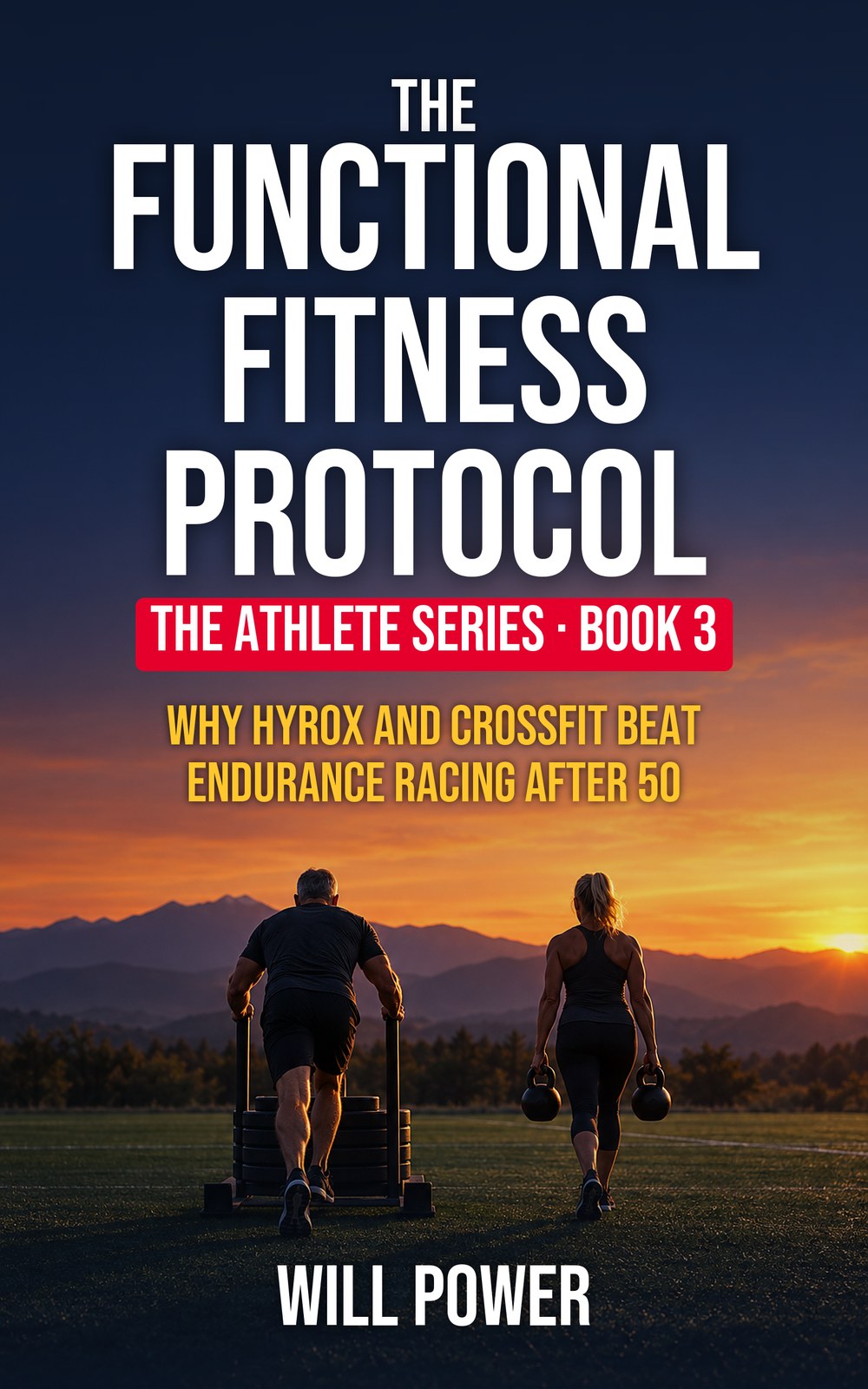
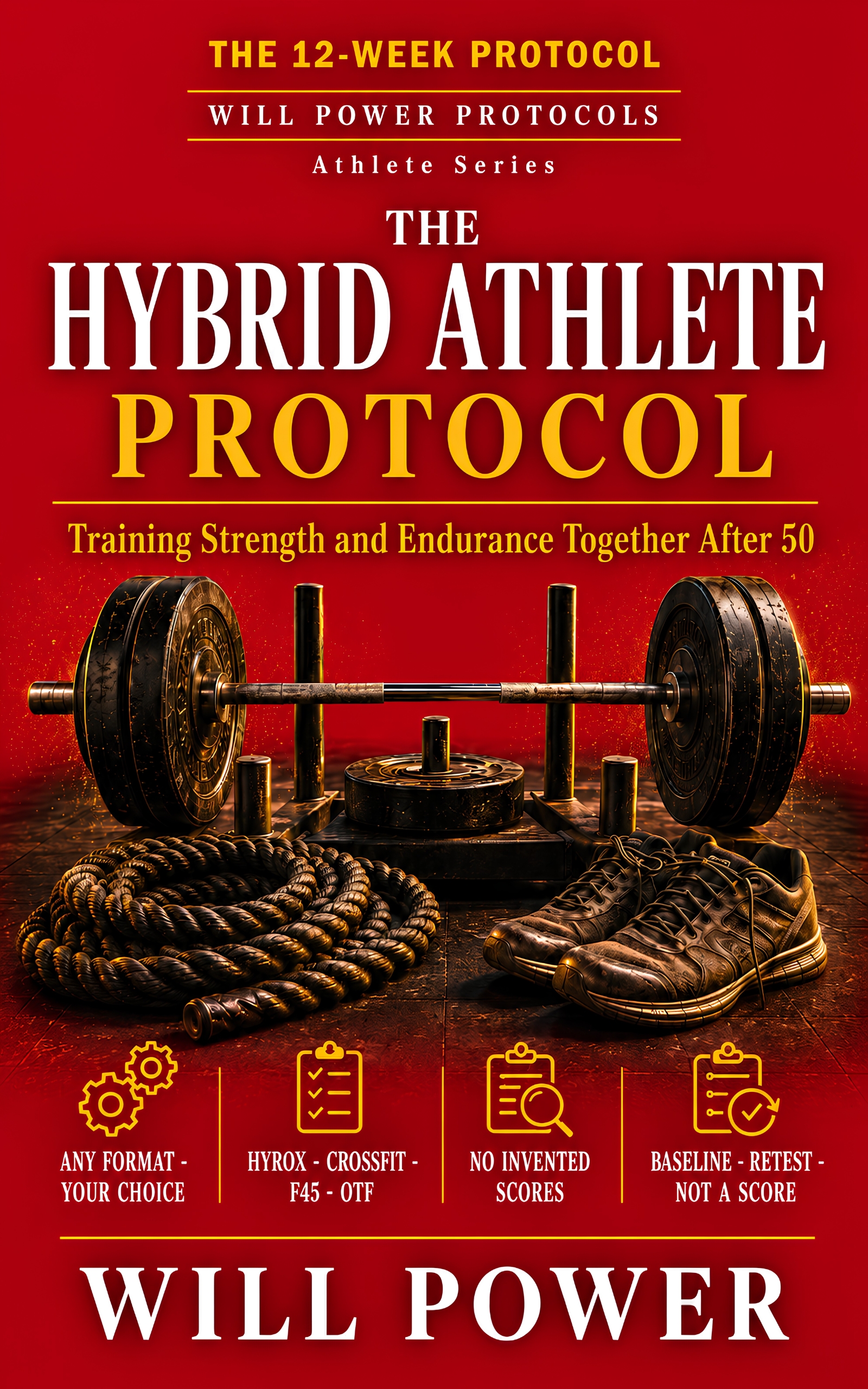
ARTICLES
NEW TO F45, CROSSFIT OR HYROX CLASSES? WHY THE FIRST WEEKS HURT, AND HOW TO EASE IN
New group classes like F45, CrossFit and HYROX often leave beginners very sore. What the research measured about delayed-onset soreness, the repeated bout effect, how tendons adapt more slowly than muscle, and CrossFit injury data, plus the four-week ramp-up from The Functional Fitness Protocol.
WHAT CHASING MORE MILES COSTS AFTER 50: WHAT THE HEART, RECOVERY AND DEPENDENCE RESEARCH MEASURED
Very high endurance volume has a research literature of its own: a Copenhagen mortality curve, atrial fibrillation data, coronary calcium scans in veteran runners, and exercise-dependence screening. Here is what each study measured, including the age detail on atrial fibrillation that runs the other way for athletes over 50.
DO HYBRID ATHLETES NEED MORE PROTEIN? WHAT THE STUDIES MEASURED
Hybrid athletes are often told they need more protein. A systematic review and two randomized trials, including a September 2026 trial in women aged 40 to 77, didn't detect a benefit from higher assigned protein targets. Here's what was measured and what wasn't.
LIFT FIRST OR CARDIO FIRST? WHAT THE SESSION-ORDER RESEARCH FOUND
Lift first or cardio first? Four session-order studies, including a meta-analysis in adults 50 to 73 and a 2026 umbrella review, point in different directions depending on who was studied and what was measured. Chapter 2 of The Hybrid Athlete Protocol treats order as a lever, not a law.
HYROX IS MOSTLY RUNNING: WHAT THE FIRST HYROX STUDY MEASURED
The first scientific study of HYROX timed a simulated race in 11 recreational athletes: a median 51.2 of 86.5 minutes went to running. What it measured, how it connects to the interference research, and the injury-data gap Chapter 5 of The Hybrid Athlete Protocol discloses.
WHY THE SAME TRAINING WEEK CAN LAND HARDER: RECOVERY CAPACITY AFTER 50
A 36-study meta-analysis found older adults didn't show greater exercise-induced muscle damage than younger adults. Chapter 9 of The Hybrid Athlete Protocol plans around recovery capacity instead: sleep, stress, a cluster-based deload check, and a set order for what to cut first.
CHOOSING YOUR CARDIO WHEN YOU ALSO LIFT: TWO QUESTIONS, NO SINGLE BEST ANSWER
There's no single best cardio for someone who also lifts. Chapter 7 of The Hybrid Athlete Protocol weighs what your goal actually tests against what a 21-study meta-analysis found about running versus cycling, and is plain about what hasn't been measured, including rucking as recovery.
WHY STRENGTH AND ENDURANCE MAY BE THE BEST TRAINING COMBINATION AFTER 50
A 2023 systematic review of 566 adults ages 50-73 found that combined strength and endurance training improved strength, power, and endurance compared with doing nothing. Its breakdown by session order points to associations, not a settled rule.
THE HYBRID ATHLETE AFTER 50: WHY YOU DON'T HAVE TO CHOOSE BETWEEN RUNNING AND STRENGTH
Randomized research on adults in their 50s, 60s, and 70s found that training strength and endurance together improved both compared with doing nothing. Here's what it showed about session order and modality, and where the evidence stops.
THE NUMBERS NOBODY TALKS ABOUT: WHAT TWO DECADES OF ENDURANCE RACING ACTUALLY COSTS
Most endurance athletes past fifty have never actually added up what their racing years have cost — in time, money, and cumulative mechanical wear. Here's the honest ledger, and the five-minute audit to run your own.
WHY I SWITCHED TO CROSSFIT AND HYROX AFTER TWO DECADES OF ENDURANCE RACING
Nineteen years of triathlon, 300+ finish lines, and a cardiology literature that finally made me ask what I should be training instead of just how much. Why grip strength, power output, and mobility took over where mileage left off.
MOBILITY IS THE NEW BASE MILEAGE
Decades of running and cycling build a powerful aerobic engine and quietly restrict the hips, ankles, and thoracic spine. Chapter 8 makes the case for treating mobility work like base mileage.
THE HOUR THAT REPLACES TEN: WHY FUNCTIONAL TRAINING BEATS ENDURANCE VOLUME AFTER 50
A serious Ironman training block runs 10-20 hours a week. A competitive Hyrox or CrossFit week runs 4-6. Here's the honest, hour-by-hour comparison -- and why the gap matters more, not less, after 50.
WHY POWER OUTPUT DECLINES FASTER THAN STRENGTH AFTER 50 — AND HOW TO STOP IT
Endurance training develops sustained aerobic output. It does not develop power — the rate of force development that declines 3–4% per year after 50 and predicts physical independence in later life. Here is what the research shows and how Hyrox, CrossFit, and HIIT rebuild it.
GRIP STRENGTH IS THE LONGEVITY METRIC ENDURANCE ATHLETES IGNORE
The PURE study tracked 139,691 adults across 17 countries and found grip strength predicts all-cause mortality better than blood pressure. Most endurance athletes have never tested it. Here is what the data shows — and the three exercises that move the number.
MORE TOPICS
THE PROTOCOL NEWSLETTER
BATTLE HARD. IN YOUR INBOX.
An email when a new research breakdown or book is published. No set schedule, so you only hear from us when there is something worth reading. No fluff, no spam.
JOIN THE LIST →Free. Unsubscribe anytime.