GRIP STRENGTH PREDICTED DEATH BETTER THAN BLOOD PRESSURE IN A 142,861-PERSON STUDY
By Will Power · Marine veteran, four-time Ironman, 300+ races · Last updated June 24, 2026
Not a physician, dietitian, researcher, healthcare provider, lawyer, or financial advisor. How studies are selected and cited
ANSWER
Every 5kg reduction in grip strength was associated with a 16 percent increase in all-cause mortality risk in the PURE study — a stronger association than systolic blood pressure showed in the same dataset. The farmer's carry is a longevity test you can improve weekly.
The Prospective Urban Rural Epidemiology (PURE) study enrolled 142,861 participants across multiple countries and tracked them for a median of four years. The finding that made it widely cited well outside cardiology: grip strength was inversely associated with all-cause mortality, with a hazard ratio of 1.16 per 5kg reduction — meaning each 5 kilograms of grip strength lost was associated with a 16 percent increase in risk of dying from any cause.
Stronger Than the Number You Probably Already Track
The association held for cardiovascular mortality (17 percent increased risk per 5kg lost), non-cardiovascular mortality (17 percent), myocardial infarction, and stroke. The detail worth sitting with: grip strength was a stronger predictor of all-cause and cardiovascular mortality than systolic blood pressure in the same dataset — a number most people over 40 already get checked at every physical, against a number almost nobody measures.
Why a Hand Measurement Predicts Whole-Body Mortality
Grip strength isn't valuable because grip itself matters that much functionally — it's valuable as a proxy for total-body muscle quality and neuromuscular function. Low grip strength tracks with sarcopenia, frailty, and the kind of systemic muscle loss that also affects cardiac muscle, respiratory muscle, and overall metabolic health. It's a cheap, fast readout of a much larger biological picture.
The practical upside: unlike most mortality risk factors, this one is directly and quickly trainable. Farmer's carries, deadlifts, dead hangs, and direct grip work (plate pinches, towel pull-ups) all improve it measurably within weeks, not years.
The farmer's carry is not an accessory exercise. It's a longevity measurement you can improve every week.
The Bottom Line
A $20 hand dynamometer gives you a number with more mortality-predictive power, in this dataset, than your blood pressure cuff — and unlike blood pressure, it responds directly to two heavy carries a week. Track it the same way you'd track any other vital sign worth taking seriously.
WRITTEN BY
WILL POWER
Founder of Will Power Protocols. Marine veteran, 300+ road races & triathlons, 4x Ironman, USAT Nationals qualifier. Books on strength, longevity & performance after 50 — claims sourced. Not a physician, lawyer, or financial advisor; educational only.
KNOW SOMEONE WHO NEEDS THIS?
FREE TOOL
GET YOUR PERSONALIZED PROTOCOL
Answer a few questions and get a training, nutrition, and recovery protocol built for your body, goals, and schedule.
THE BOOK FOR THIS TOPIC
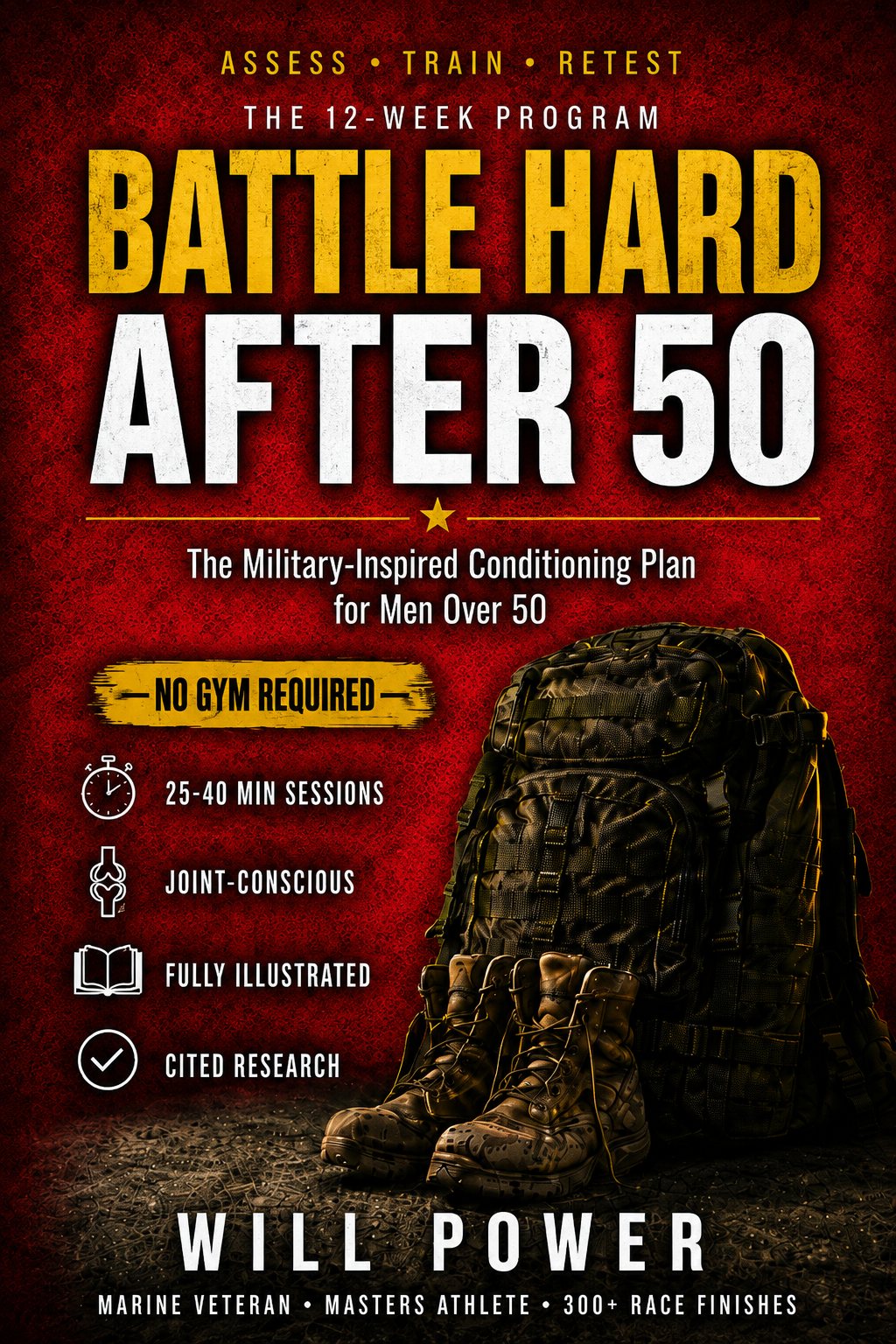
BATTLE HARD AFTER 50
A twelve-week, no-gym-required strength and conditioning protocol for men over 50, built on a five-domain self-assessment — strength, power, engine, carry and grip, and mobility — instead of one overall fitness score.
Medical disclaimer. This article is for educational purposes only and is not medical advice. These statements have not been evaluated by the Food and Drug Administration, and nothing on this site is intended to diagnose, treat, cure, or prevent any disease. I share published research as a health enthusiast and endurance athlete, not as a clinician — I do not interpret your results and I do not diagnose. Consult your physician before making changes to your supplement, training, or nutrition regimen, especially if you take prescription medication or have an existing health condition.
FREE GUIDE
THE LONGEVITY SELF-TEST LOG
How to run five simple fitness tests at home, from the floor test to a timed walk, what the published studies measured for each, and a log to retest every three months. Free PDF. Enter your email and it opens right away.
You'll also get the occasional newsletter. No spam. Unsubscribe anytime.
MORE ARTICLES
STANDING ON ONE LEG AND RISING FROM THE FLOOR: WHAT THE MORTALITY STUDIES MEASURED
6 min read →
FALLS AND EXERCISE: WHAT 108 RANDOMIZED TRIALS MEASURED
7 min read →
THREE ONE-MINUTE BURSTS A DAY: WHAT THE VILPA RESEARCH ACTUALLY SHOWS
6 min read →
THE WEEKEND WARRIOR PATTERN: DOES TWO BIG DAYS BEAT A SPREAD-OUT WEEK?
4 min read →